
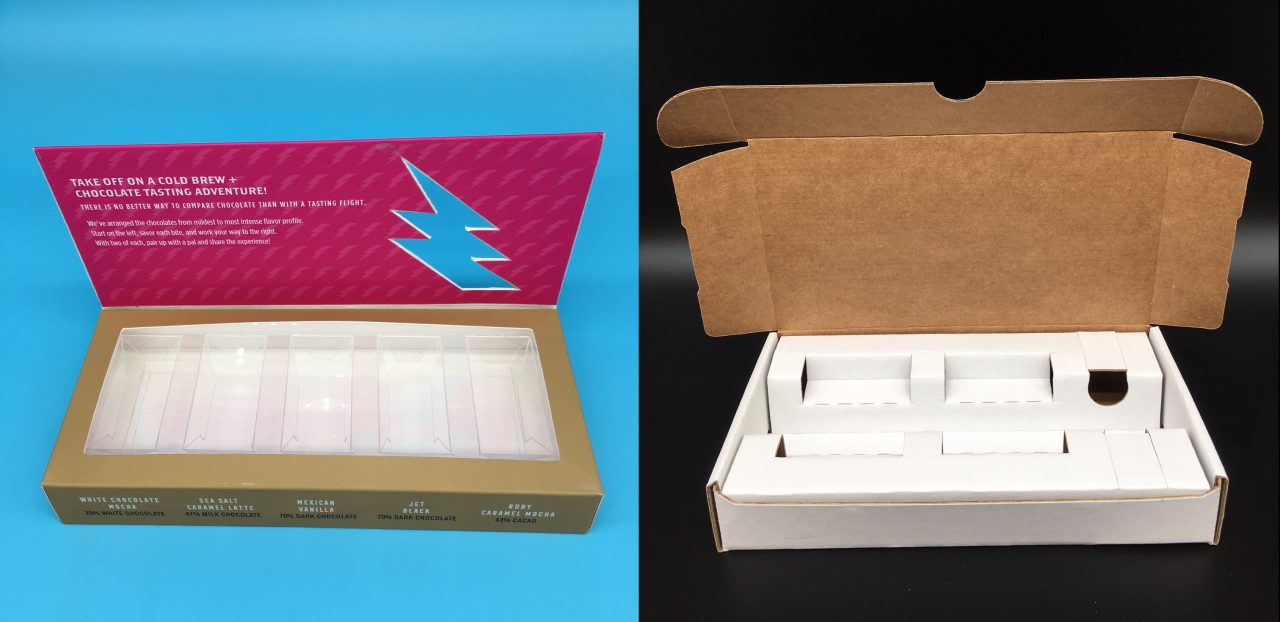
Choose a corrugated or paperboard insert when the product is fairly sturdy, the budget is tight or the pack needs to recycle with the box. Choose foam when the product is fragile, heavy for its size or meant to look presented when the lid comes off. Both can be cut without tooling, so either one can start as a single prototype. The questions below cover how the two compare and where molded inserts fit. For every insert type in one place, see custom packaging inserts.
What is the difference between foam and corrugated inserts?
A corrugated or paperboard insert is a flat sheet that is cut, scored and folded into a structure. It holds the product by its shape: tabs, cut-outs, folds and partitions that stop the product moving. A foam insert is a block or sheet of cushioning material with a cavity cut to the outline of the product. It holds the product by surrounding it and absorbs shock by compressing.
| Corrugated or paperboard insert | Die cut foam insert | |
|---|---|---|
| How it holds the product | Folds, tabs, cut-outs and partitions | A cavity cut to the product outline |
| Best for | Sturdy products, retail cartons, shipping boxes, tight budgets | Fragile or premium products, kits and presentation boxes |
| Material cost | Among the least expensive inserts | Higher than paperboard |
| Small quantities | Yes, cut from the dieline with no die | Yes, cut from sheets with no mold |
| Depth | Built up by folding the sheet | Built up by stacking sheets with different cut-outs |
| End of life | Recycles with the box | Depends on the foam; usually kept or thrown away |
When is a corrugated or paperboard insert the better choice?
When the product can take normal handling and mainly needs to be kept in place. Board inserts are among the least expensive inserts to make, and they are often cut from the same material as the package, so the box and the insert are designed, printed and cut together. They ship and store flat, and the customer can put the whole pack in the paper recycling.
The limits are worth knowing. Thin board may not hold a product whose shape or weight makes it hard to secure, and a design that has to be glued up by hand costs more than one that folds into place. A structural designer can usually solve the first problem with a heavier board or a different fold. If the product still moves in a drop, foam is the next step.
When is foam the better choice?
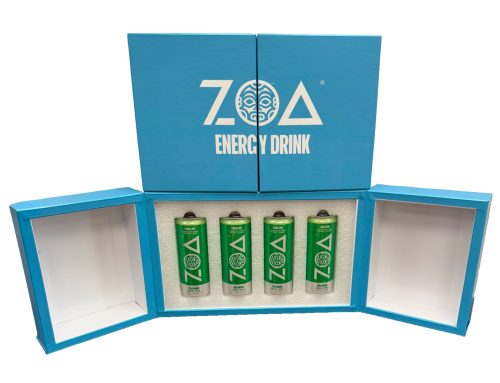
When the product is fragile, when it is heavy for its size, or when the opening is part of the experience. Foam comes in a range of densities and colors, from soft and light to dense and rigid, so it can be matched to what it has to protect. A cavity cut to the outline of the product holds it on every side and gives the pack a finished look when it is opened. That is why foam is common in presentation boxes and influencer kits.
Foam sheets are cut all the way through, so a deep or stepped product is handled by stacking sheets with different cut-outs until the insert reaches the full depth.
Which costs less, foam or corrugated?
Corrugated and paperboard, in most cases. The material costs less than foam, and the insert can often be cut in line with the box. Foam costs more as a material but is still practical at low, medium and high quantities. The cost that changes the answer is hand work: a board insert that needs gluing and assembling by hand can lose its advantage. Every project is different, so ask for both to be priced if the choice is close.
Which is easier to recycle?
Corrugated and paperboard. They are paper products, and a board insert goes into the recycling with the box. Most foams are not collected with household recycling, so a foam insert is usually kept with the product or thrown away. There are plant-based alternatives: Green Cell foam is made from corn starch and is biodegradable and compostable. Molded pulp, the material used for egg cartons, is made from recycled paper, but it needs a mold and suits large quantities.
What are dunnage inserts?
Dunnage is the trade word for whatever fills the space around a product and keeps it from moving or being damaged in transit. A dunnage insert can be corrugated partitions, a die cut board cradle, cut foam or a molded piece. For retail packaging, loose filler such as crumpled paper or bubble wrap does not do the job. A custom insert, in board or foam, is dunnage that is designed around one product.
What about molded foam, styrofoam and molded pulp inserts?
Molded inserts are a different category from cut ones. Molded styrofoam (expanded polystyrene), thermoformed plastic and molded pulp are all formed on a three-dimensional mold. The mold and the set-up are costly, so these inserts make sense for large production runs, such as electronics and appliances, and not for prototypes or short runs. For a launch, a test market or a kit, a cut insert in board or foam is the practical route. Our guide to custom packaging inserts describes each type, with photos.
Can I get foam or corrugated inserts in a small quantity?
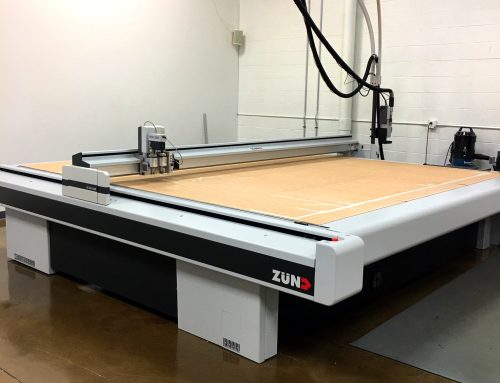
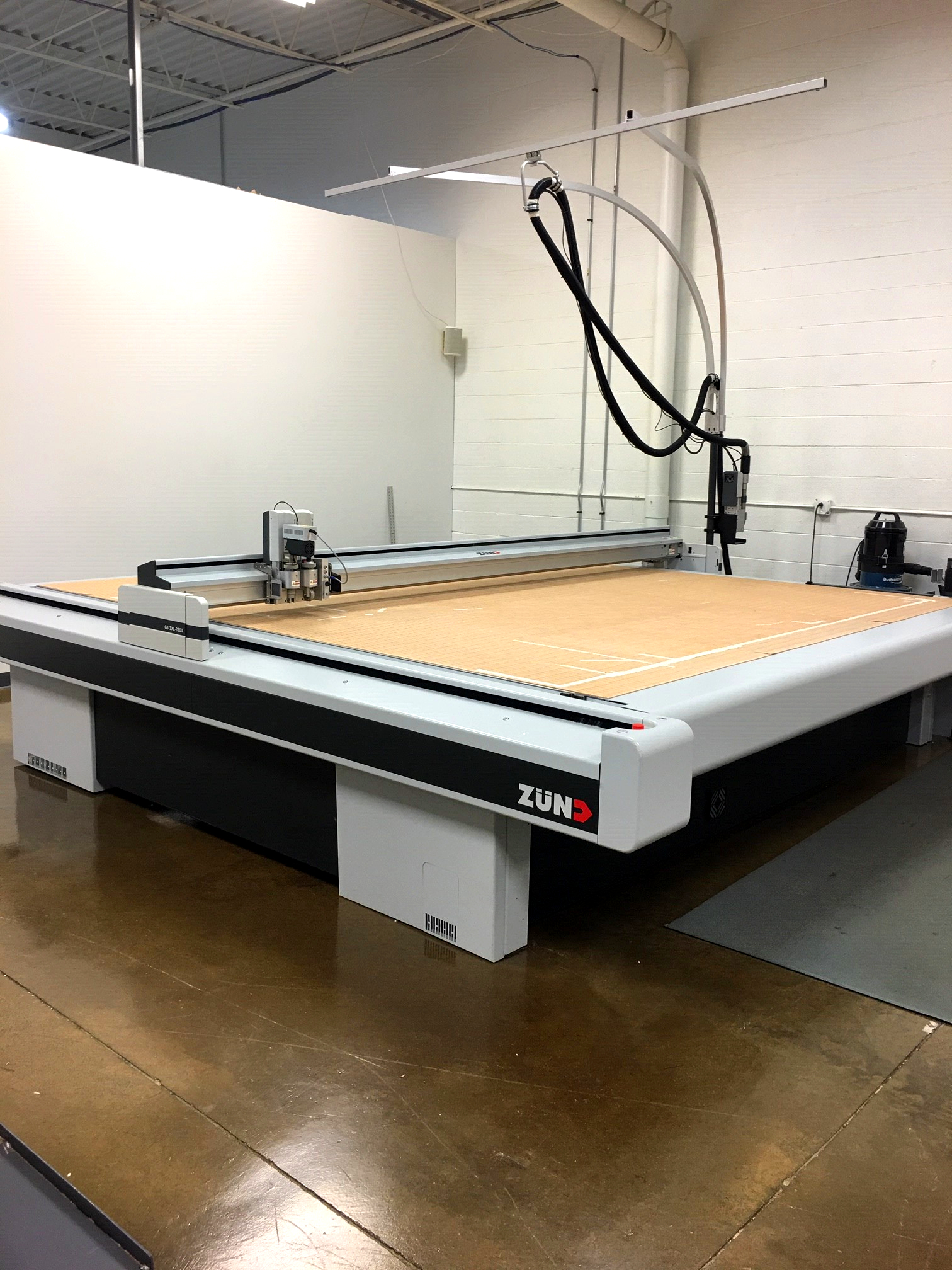
Yes. Board inserts are cut from the dieline on a digital cutting table, and foam can be cut from sheets, so neither needs a die or a mold for a prototype or a short run. Create It Packaging designs and cuts custom inserts in foam or board in Lake Zurich, Illinois, together with the box they go in, and ships nationwide.
Can I test both before I decide?
Yes, and it is the surest way to choose. A prototype can be a complete pack with its insert, printed and cut together, so you can load the real product, check the fit, shake it, ship it to yourself and see how it looks when it is opened. Our structural design team shapes the insert around the product, and the guide to packaging prototypes explains the process.
What do you need to quote an insert?
The product, or its dimensions and weight; the box it goes in, if it already exists; the quantity; how the pack will ship; and the look you want when it is opened. Request a quote and say whether you want board, foam or both priced. If the box is still to be designed, start with corrugated boxes or folding cartons, or see every question buyers ask in where to get custom packaging made.




[…] should recycle with the box; foam when the product is fragile or the opening has to look finished. Foam vs corrugated packaging inserts compares the two on protection, cost, quantity and […]
[…] has to look finished. Both can be cut without tooling, so you can prototype each and compare. Foam vs corrugated packaging inserts sets the two side by […]